Getting started#
Hi there and welcome to the getting started guide of TASI 👋😀 This page shall help to get started right away with
instructions on how to install TASI and a description of the main TASI concepts. You may visit the following links
one after another. Note that the sections may contain links to external pages. It is recommended to visit those links
before continuing. If you have any questions regarding TASI, feel free raise an issue. Happy reading 😁
Installation#
An always up-2-date version of TASI is available via the Pypi registry. So, to get started with TASI, its just a
matter of installing tasi with
pip install tasi
Basic concepts#
Similar to pandas and geopandas in TASI, we represent traffic data using a tabular-styled format. To achive this,
TASI extends pandas and geopandas to provide functionality for traffic data analysis. The top-level model is
the Dataset
as illustrated in Fig. 1. Every row in a Dataset contains information for a specific point
in time as attributes. That is, an attribute can be any relevant traffic information, e.g., the position of a traffic
participant or the rain intensity.
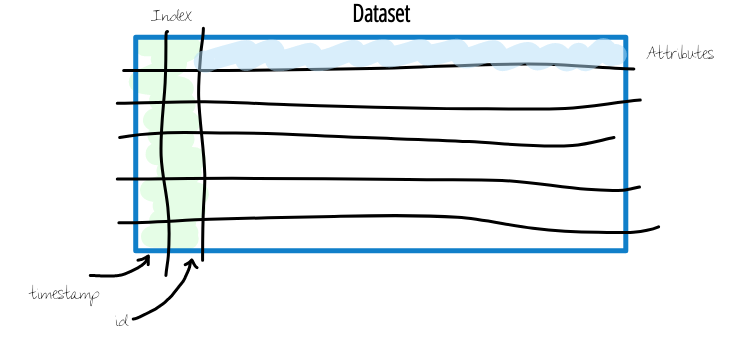
Fig. 1 The top level model for traffic data representation is the Dataset.#
Most of the time, we will work with information about the traffic participants that are represented in the
Dataset. To make live a little bit easier, TASI uses a hierarchical view on trajectory data based on the
Dataset as illustrated in Fig. 2. Since a Dataset typically contains
information about multiple traffic participants, each having a trajectory, the Dataset is a container for
multiple Trajectory. This is denoted with the different id values and color encoded rows. Furthermore,
since a single row is a representation of a traffic participant’s state in a specific point in time, the
Pose
representation of a traffic participant’s state for a specific point in time is with the class.
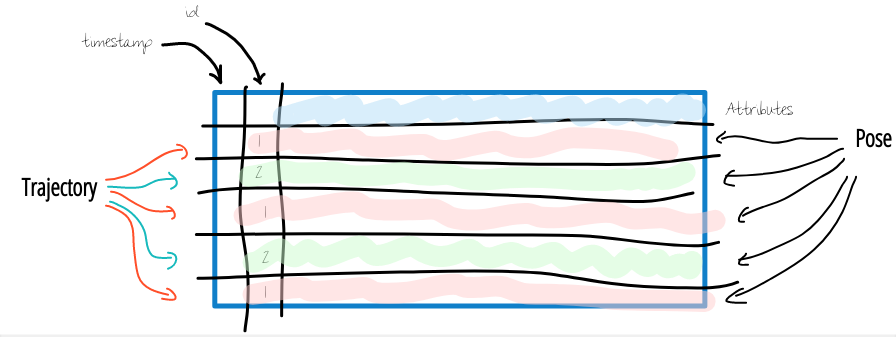
Fig. 2 Hierarchical view on trajectory data.#
Since TASI uses Pandas under the hood, head over to the official pandas
User Guide. Afterwards, you may head over to the User
Guide for some use-case related examples using
TASI. If you want to contribute to TASI, visit Development Documentation for further instructions.